

Harvard Longwood Campus Research Protocol IRB25-0465
Harvard Longwood Campus
Research Protocol IRB25-0465
Infertility or miscarriage grief that won’t fade?
Infertility or miscarriage grief that won’t fade?
A Harvard researchers-led study is testing whether a structured writing intervention can
help reduce the stress, grief, and trauma linked to infertility, miscarriage, or failed treatments.
A Harvard researchers-led study is testing whether a structured writing intervention can help reduce the stress, grief, and trauma linked to infertility, miscarriage, or failed treatments.
Quick 3-minute check. Your answers stay anonymous.
The INSPIRE Study is recruiting participants to help Harvard researchers better understand
the emotional aspects and challenges of experiencing infertility or miscarriage and to
evaluate supportive tools designed to reduce emotional stress. Participation involves a private, guided process at home, featuring interactive, easy-to-complete writing sessions.
By joining, you can gain access to tools for healing and recovery and help shape better care for females like you experiencing infertility stress.
The INSPIRE Study is recruiting participants to help Harvard researchers better understand
the emotional aspects and challenges of experiencing infertility or miscarriage and to
evaluate supportive tools designed to reduce emotional stress. Participation involves a private, guided process at home, featuring interactive, easy-to-complete writing sessions.
By joining, you can gain access to tools for healing and recovery and help shape better care for females like you experiencing infertility stress.
You’re only 3 minutes away from knowing.
Anonymous, quick, easy.
You’re only 3 minutes away from knowing.
Confidential, quick, easy.




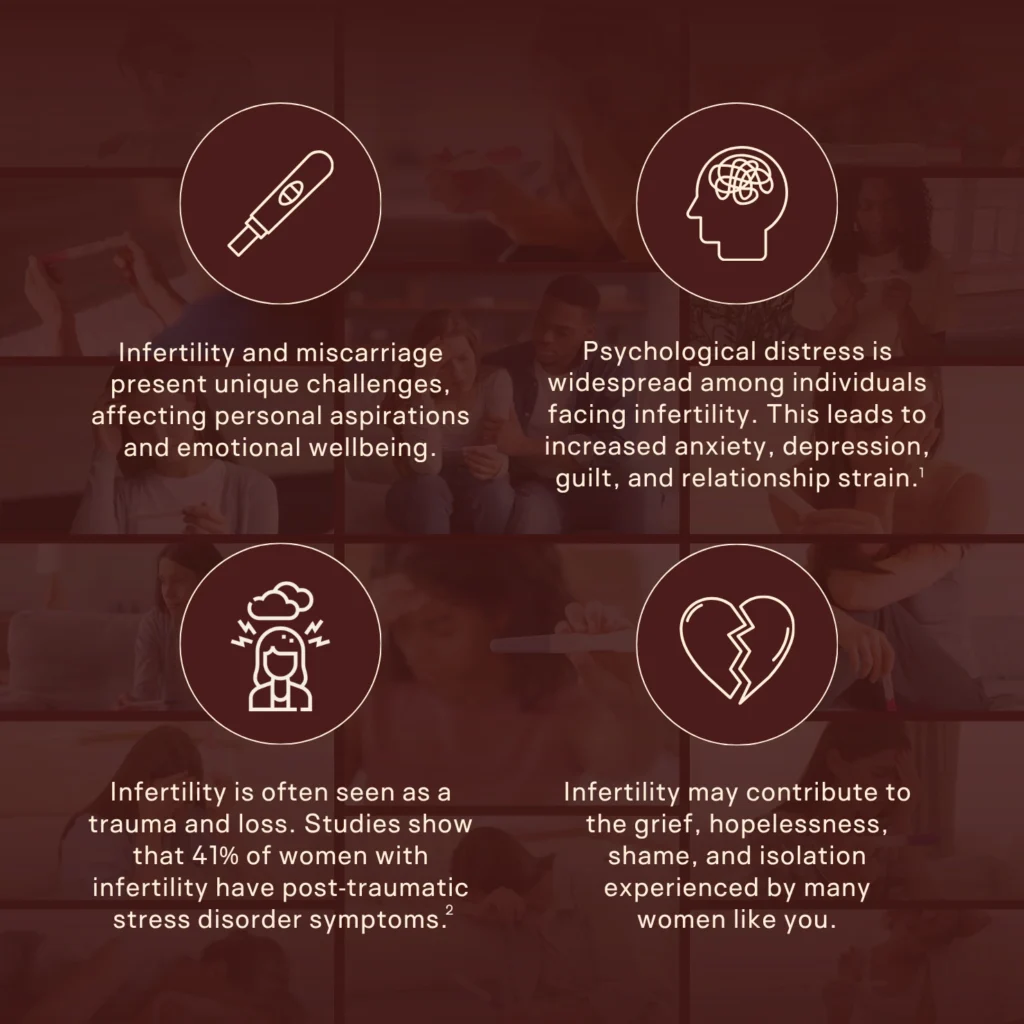
Infertility and miscarriage present unique challenges, affecting personal aspirations and emotional wellbeing.
Psychological distress is widespread among individuals facing infertility. This leads to increased anxiety, depression, guilt, and relationship strain.¹
Infertility is often seen as a trauma and loss. Studies show that 41% of women with infertility have post-traumatic stress disorder symptoms.²
Infertility may contribute to the grief, hopelessness, shame, and isolation experienced by many women like you.
Takes just 3 minutes. Your answers remain 100% anonymous.
Takes just 3 minutes. Your answers remain 100% anonymous.
About our Research,
the INSPIRE Study
About our research,
the INSPIRE Study
The INSPIRE Study is a Harvard researchers-led project focused on understanding the emotional stress females face during long-term infertility or miscarriage. Led by Gabriela Rosa, Doctoral Candidate at the Harvard T.H. Chan School of Public Health, it uses guided, private writing sessions to help process their feelings in a safe, accessible way (fully online). The study aims to offer relief and improve emotional support for females experiencing infertility stress. Harvard Longwood Campus Research Protocol IRB25-0465
The INSPIRE Study is a Harvard researchers-led project focused on understanding the emotional stress females face during long-term infertility or miscarriage. Led by Gabriela Rosa, Doctoral Candidate at the Harvard T.H. Chan School of Public Health, it uses guided, private writing sessions to help process their feelings in a safe, accessible way (fully online). The study aims to offer relief and improve emotional support for females experiencing infertility stress. Harvard Longwood Campus Research Protocol IRB25-0465
Research Objectives
Research objectives
The INSPIRE Study seeks to:
- Learn how females describe their feelings and emotional wellbeing having experienced long-term infertility.
- Understand how females reflect on their fertility journey and what it means to them.
- Identify common emotional challenges related to infertility or miscarriage and how females cope with them.
- Explore the extent to which females may benefit from a tool to manage emotional stress: guided, private, and easy-to-complete writing sessions.
These findings may inform future strategies for emotional and psychological support within fertility care that can be implemented in females like you.
The INSPIRE Study seeks to:
- Learn how females describe their feelings and emotional wellbeing having experienced long-term infertility.
- Understand how females reflect on their fertility journey and what it means to them.
- Identify common emotional challenges related to infertility or miscarriage and how females cope with them.
- Explore the extent to which females may benefit from a tool to manage emotional stress: guided, private, and easy-to-complete writing sessions.
These findings may inform future strategies for emotional and psychological support within fertility care that can be implemented in females like you.
Why is This Important?
Why is This important?
While fertility treatment options have evolved, emotional wellbeing is still often overlooked in clinical care. The personal experiences of females navigating long-term infertility or miscarriage are rarely the focus of research, even though many report chronic stress and emotional exhaustion.3,4
The INSPIRE Study aims to fill this gap by centering the voices of females living through infertility.
Your participation could contribute to the development of more compassionate and effective support systems for others facing similar journeys.
While fertility treatment options have evolved, emotional wellbeing is still often overlooked in clinical care. The personal experiences of females navigating long-term infertility or miscarriage are rarely the focus of research, even though many report chronic stress and emotional exhaustion.3,4
The INSPIRE Study aims to fill this gap by centering the voices of females living through infertility.
Your participation could contribute to the development of more compassionate and effective support systems for others facing similar journeys.
Answer a few simple questions in just 3 minutes to see if you qualify to participate in the INSPIRE Study.
Answer a few simple questions in just 3 minutes to see if you qualify to participate in the INSPIRE Study.
Are you Eligible for
Participation?
Are you eligible for participation?
You may be eligible to participate in the INSPIRE Study if you:
- Are a female, 18 years or older.
- Have been trying to conceive for 2 years or more (without success), due to infertility, miscarriage or failed treatments.
- Are not planning to undergo any stimulated or medicated fertility treatment (such as IVF, IUI, egg collection, embryo transfer, or medicated cycles) during the 4–6 week study period.
- Self-report moderate to high emotional distress related to infertility (we will let you know this information after you answer the eligibility questions).
- Can read, write, and type in English.
- Have access to a computer or device with internet connection.
- Feel comfortable typing responses to brief online prompts.
By joining the INSPIRE Study, you will primarily engage in easy-to-complete writing sessions on your computer. These sessions are completely private and confidential—no one will see what you write—and they will be guided by our expert staff.
What Does Participation Involve?
- Completing a short online screening questionnaire.
- Filling out 3 short surveys—one before the study begins, one immediately after, and one 4 weeks later.
- Participating in 4 consecutive days of guided online writing activities:
○ Day 1 and Day 4: Live Zoom writing sessions.
○ Day 2 and Day 3: Writing sessions completed independently on your own time.
This study is completely remote and designed to be flexible and confidential. Participants may withdraw at any time.
You may be eligible to participate in the INSPIRE Study if you:
- Are a female, 18 years or older.
- Have been trying to conceive for 2 years or more (without success), due to infertility, miscarriage or failed treatments.
- Are not planning to undergo any stimulated or medicated fertility treatment (such as IVF, IUI, egg collection, embryo transfer, or medicated cycles) during the 4–6 week study period.
- Self-report moderate to high emotional distress related to infertility (we will let you know this information after you answer the eligibility questions).
- Can read, write, and type in English.
- Have access to a computer or device with internet connection.
- Feel comfortable typing responses to brief online prompts.
By joining the INSPIRE Study, you will primarily engage in easy-to-complete writing sessions on your computer. These sessions are completely private and confidential—no one will see what you write—and they will be guided by our expert staff.
What Does Participation Involve?
- Completing a short online screening questionnaire.
- Filling out 3 short surveys—one before the study begins, one immediately after, and one 4 weeks later.
- Participating in 4 consecutive days of guided online writing activities:
○ Day 1 and Day 4: Live Zoom writing sessions.
○ Day 2 and Day 3: Writing sessions completed independently on your own time.
This study is completely remote and designed to be flexible and confidential. Participants may withdraw at any time.
Compensation
Compensation
Complete all study activities and receive two exclusive resources by Harvard-awarded fertility specialist Gabriela Rosa, a supportive audiobook, Fertility Breakthrough: Overcoming infertility and recurrent miscarriage when other treatments have failed, and a guided reflection journal, Joyful Surrender: How to get pregnant by letting go, designed to help you navigate and heal through your fertility journey. Both are yours to keep, no cost as a thank-you for participating.
Please note: There is no financial payment for participating in this study.
Complete all study activities and receive two exclusive resources by Harvard-awarded fertility specialist Gabriela Rosa, a supportive audiobook, Fertility Breakthrough: Overcoming infertility and recurrent miscarriage when other treatments have failed, and a guided reflection journal, Joyful Surrender: How to get pregnant by letting go, designed to help you navigate and heal through your fertility journey. Both are yours to keep, no cost as a thank-you for participating.
Please note: There is no financial payment for participating in this study.
Check your Eligibility
Check your eligibility
Interested in participating in the INSPIRE Study?
Take a moment to complete a short, 3-minute questionnaire to see if you qualify.
It only takes a few minutes and helps us ensure the study is the right fit for you.
Interested in participating in the INSPIRE Study?
Take a moment to complete a short, 3-minute questionnaire to see if you qualify.
It only takes a few minutes and helps us ensure the study is the right fit for you.
3 minutes, zero pressure. Your answers stay anonymous.
3 minutes, zero pressure. Your answers stay anonymous.
Are You a Potential Collaborator?
Are You a Potential Collaborator?
If you are a clinician, counsellor, researcher, support group facilitator, or community organization interested in sharing this study with your audience, we welcome your support.
We provide a complete, IRB-approved sharing toolkit—including a printable poster, flyer, pre-written email, and social media assets—to ensure all outreach remains accurate and compliant.
If you are a clinician, counsellor, researcher, support group facilitator, or community organization interested in sharing this study with your audience, we welcome your support.
We provide a complete, IRB-approved sharing toolkit—including a printable poster, flyer, pre-written email, and social media assets—to ensure all outreach remains accurate and compliant.
Questions?
Questions?
If you’d like to learn more or have any questions about the INSPIRE Study, feel free to reach out to us anytime at: [email protected] Harvard Longwood Campus Research Protocol IRB25-0465
If you’d like to learn more or have any questions about the INSPIRE Study, feel free to reach out to us anytime at: [email protected] Harvard Longwood Campus Research Protocol IRB25-0465
References
References
- Rooney, K. L., & Domar, A. D. (2018). The relationship between stress and infertility. Dialogues in Clinical Neuroscience, 20(1), 41–47. https://doi.org/10.31887/DCNS.2018.20.1/klrooney
- Roozitalab, S., Rahimzadeh, M., Mirmajidi, S. R., Ataee, M., & Esmaelzadeh Saeieh, S. (2021). The Relationship Between Infertility, Stress, and Quality of Life with Posttraumatic Stress Disorder in Infertile Women. Journal of Reproduction & Infertility, 22(4), 282–288. https://doi.org/10.18502/jri.v22i4.7654
- Salari, N., Babajani, F., Hosseinian-Far, A., Hasheminezhad, R., Abdoli, N., Haydarisharaf, P., & Mohammadi, M. (2024). Global prevalence of major depressive disorder, generalized anxiety, stress, and depression among infertile women: a systematic review and meta-analysis. Archives of Gynecology and Obstetrics, 309(5), 1833–1846. https://doi.org/10.1007/s00404-024-07444-y
- Wang, G., Liu, X., & Lei, J. (2023). Effects of mindfulness-based intervention for women with infertility: a systematic review and meta-analysis. Archives of Women S Mental Health, 26(2), 245–258. https://doi.org/10.1007/s00737-023-01307-2